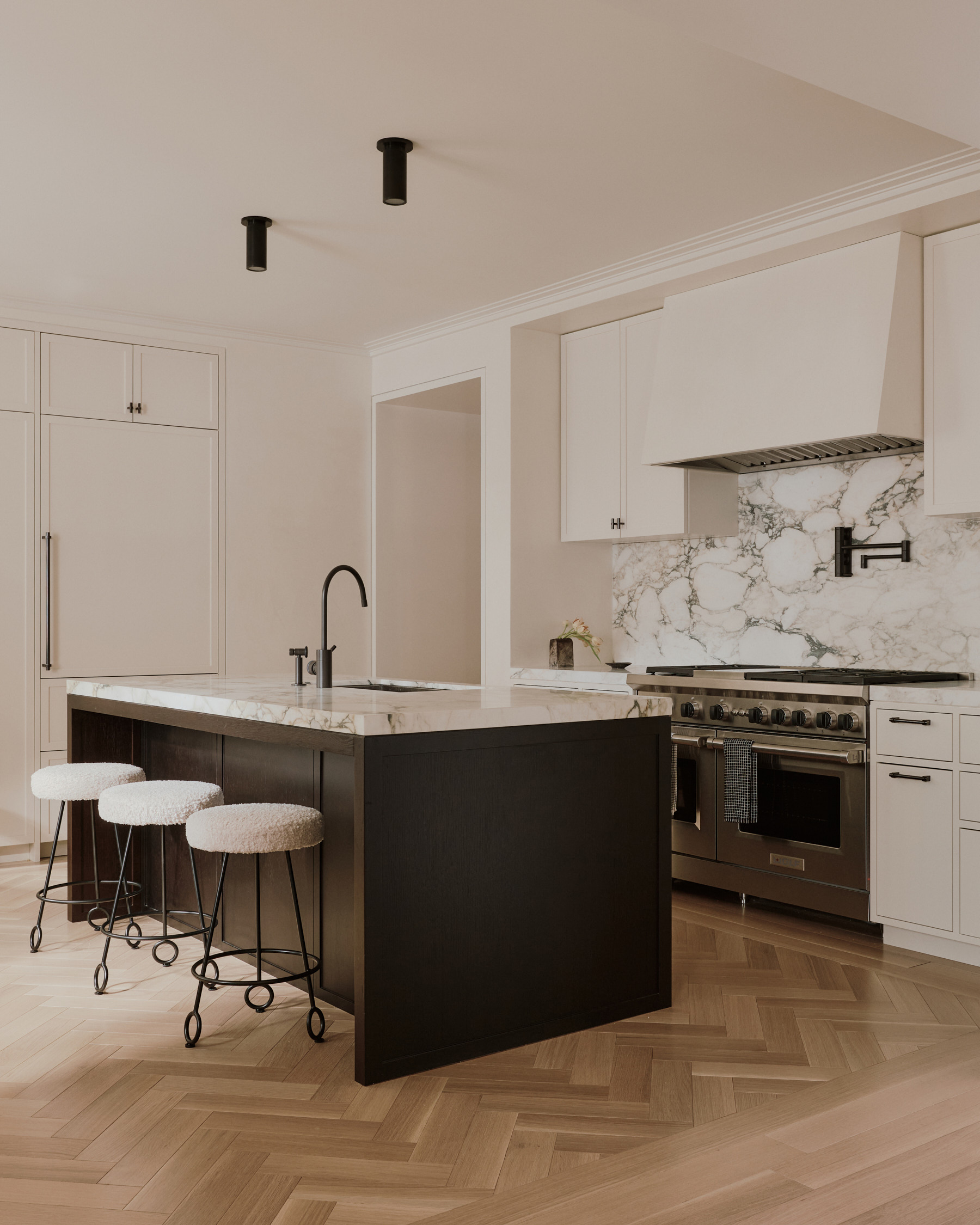

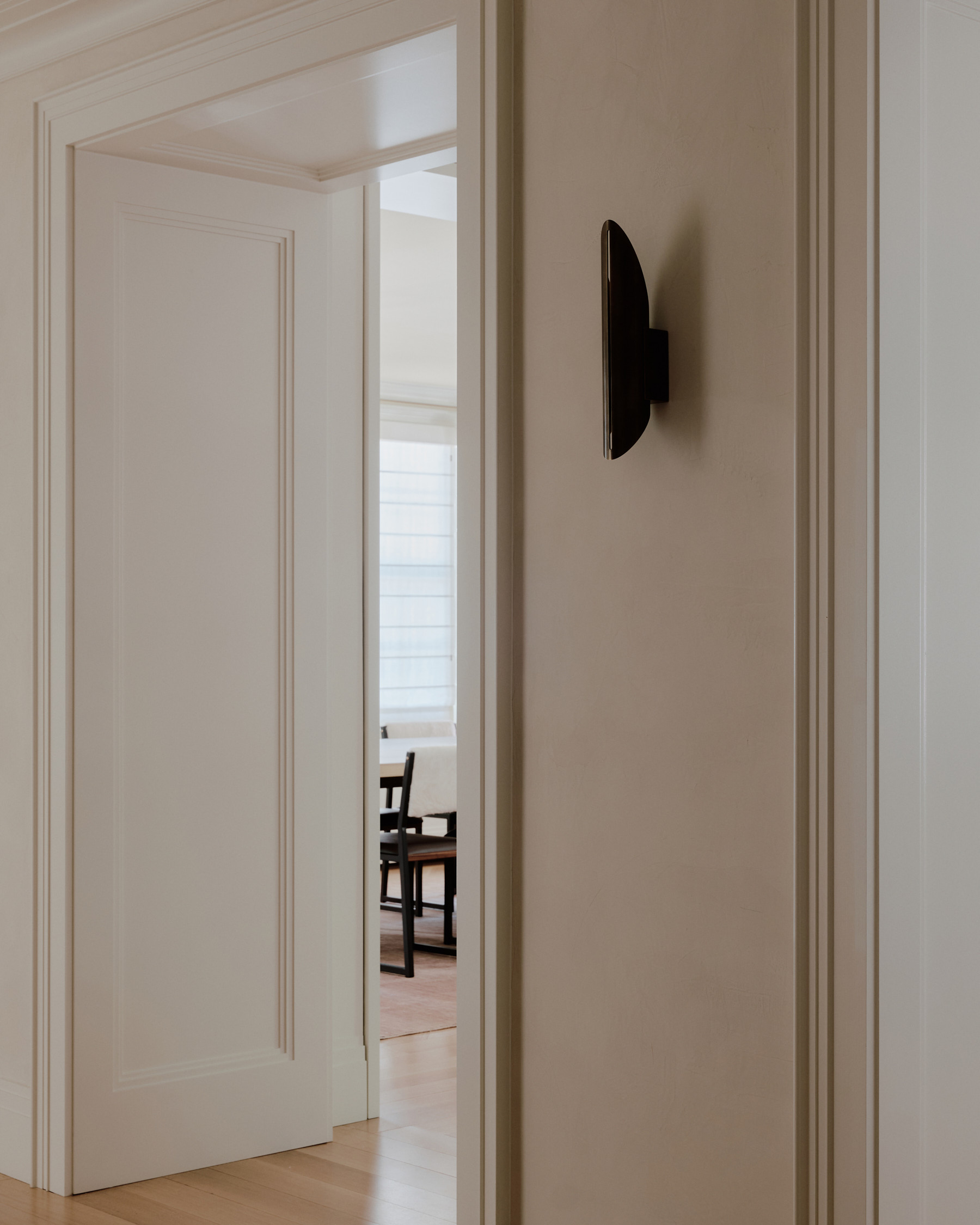

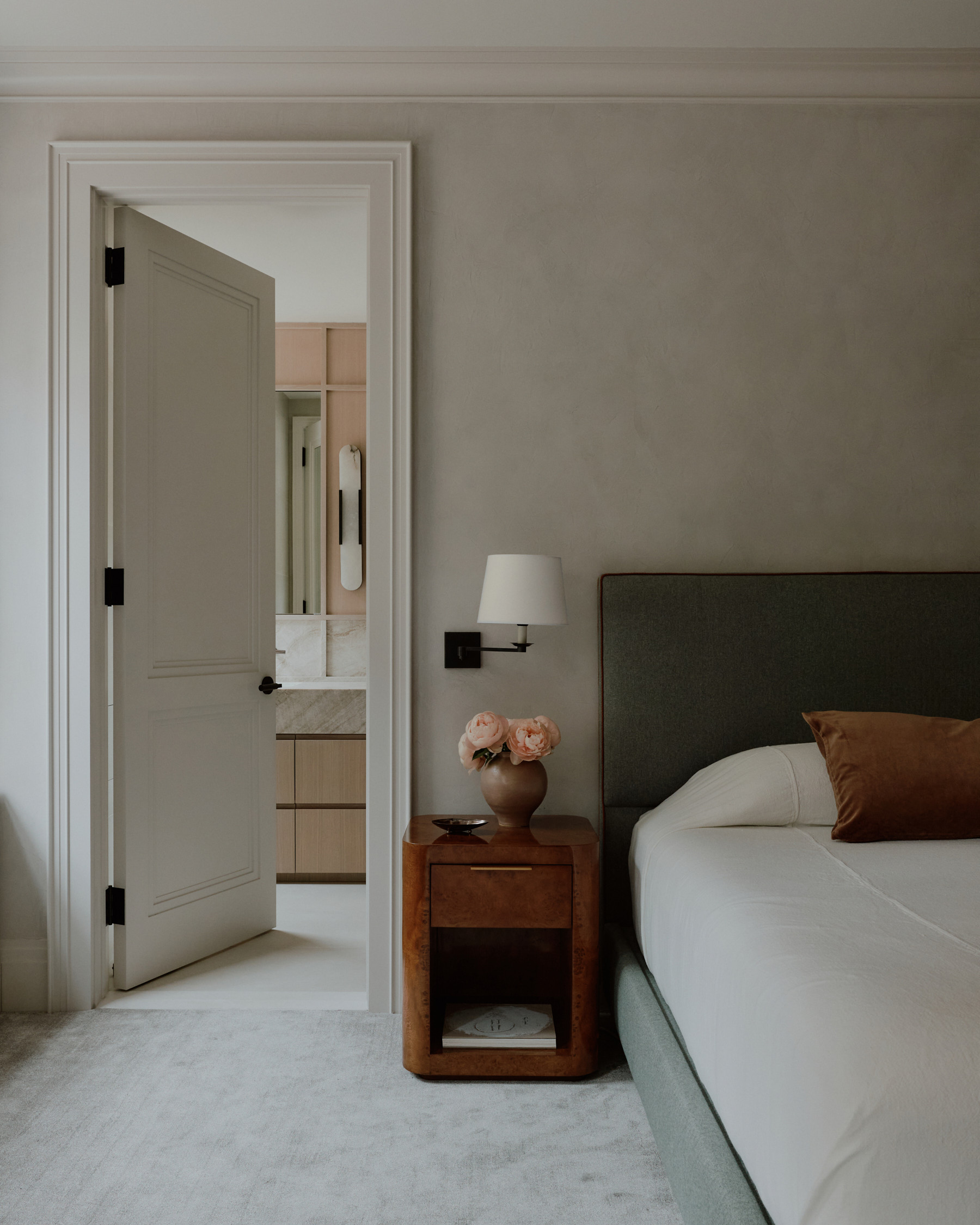
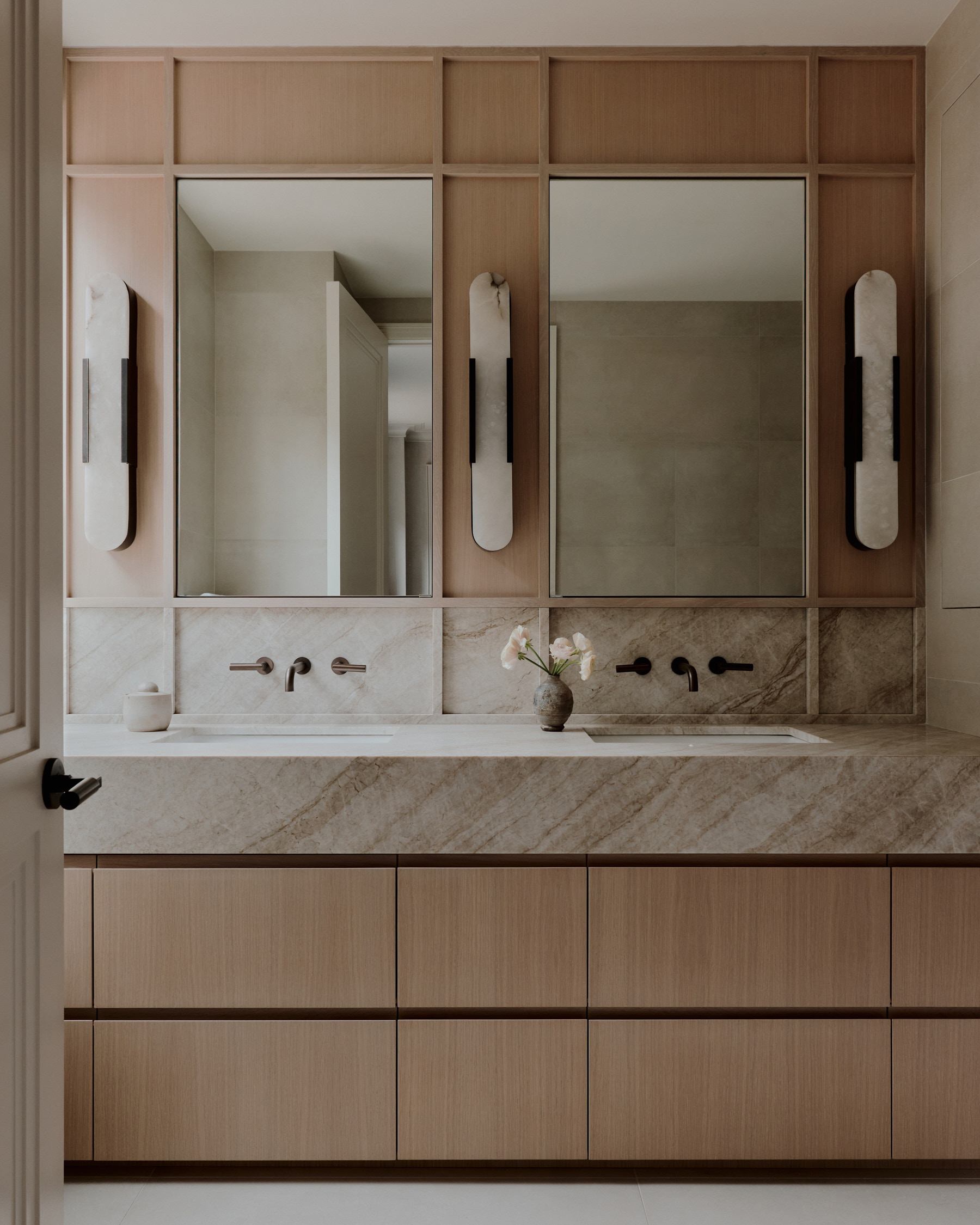
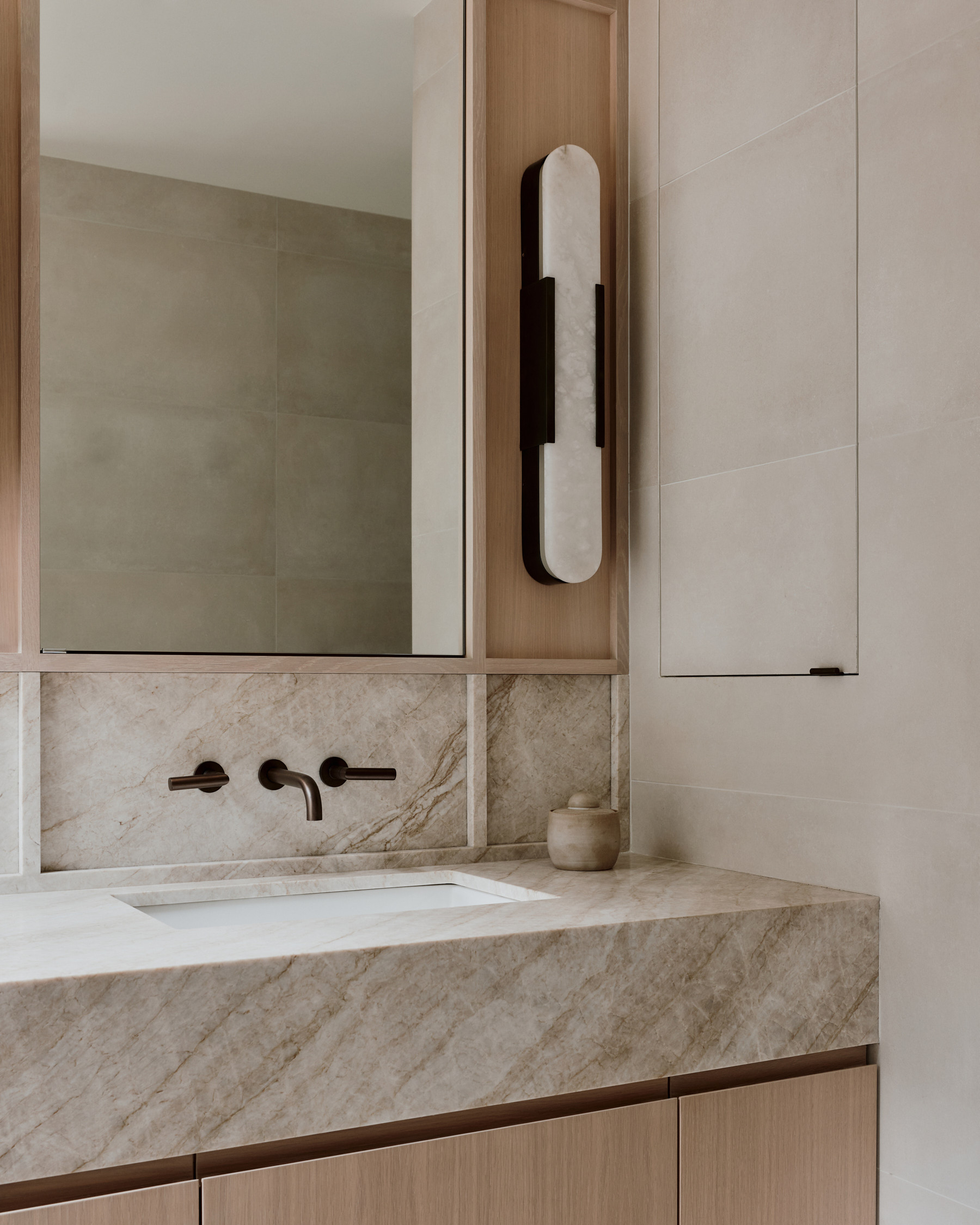

Elmo Studios undertook the transformation of a rare 5,000-square-foot maisonette in Carnegie Hill, reimagining it for a young family with two small children while honoring the legacy of its pre-war architecture. The clients envisioned a more open, light-filled environment suited to contemporary family life, with three key requests guiding the design: a complete reconfiguration of the lower level, the creation of a new primary suite, and a full aesthetic overhaul that would erase the dated surfaces and piecemeal renovations accumulated over decades.
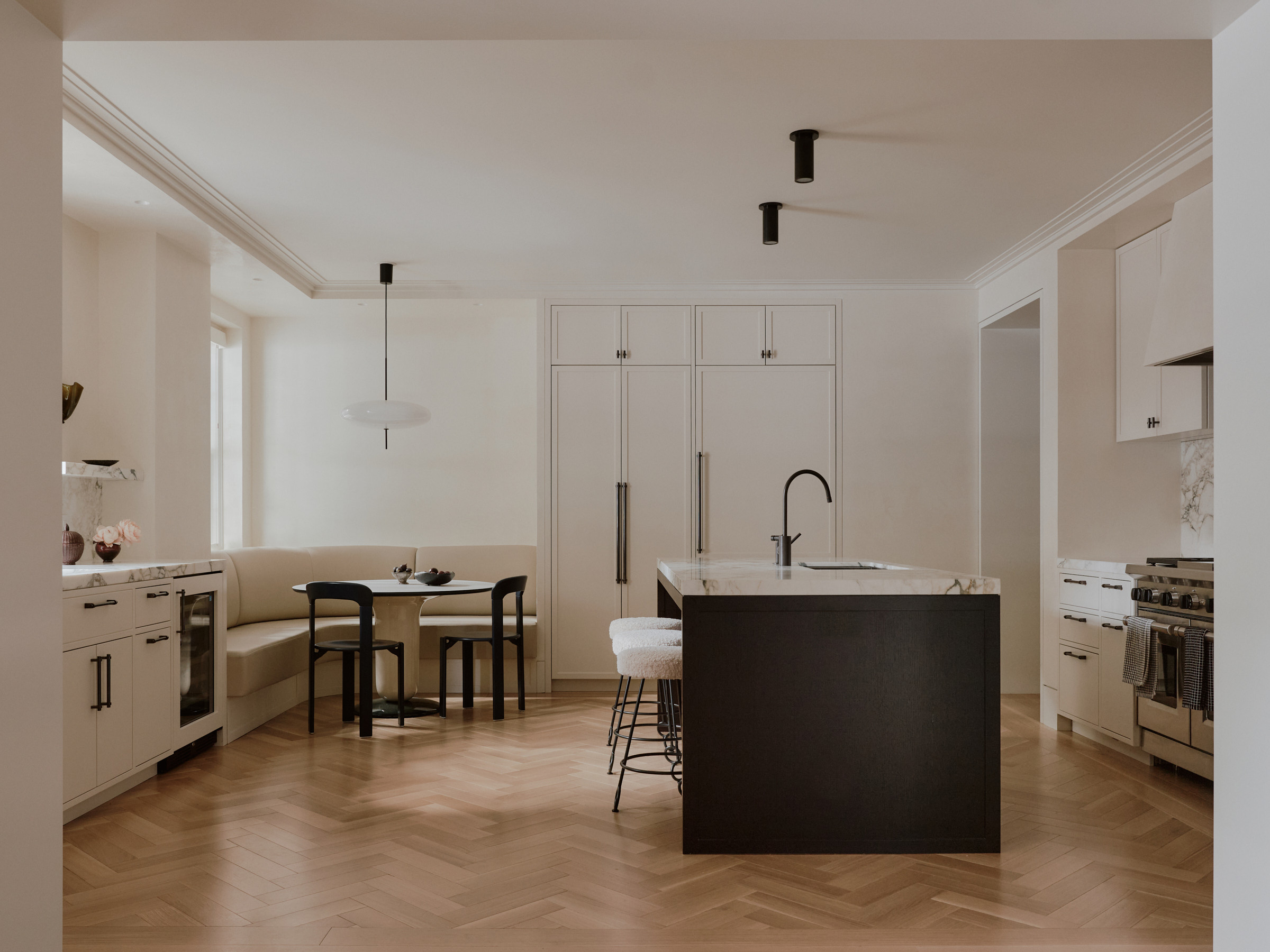
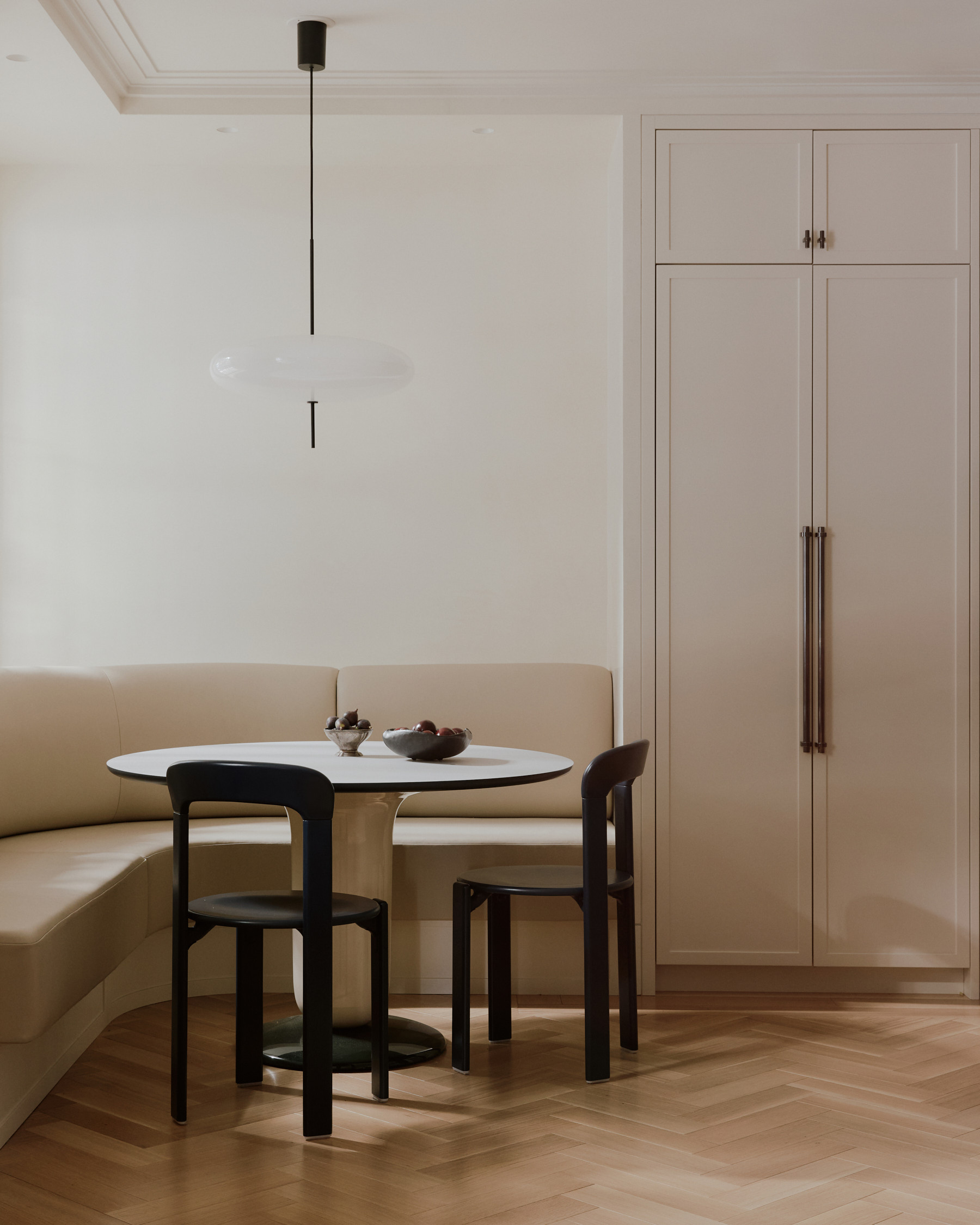
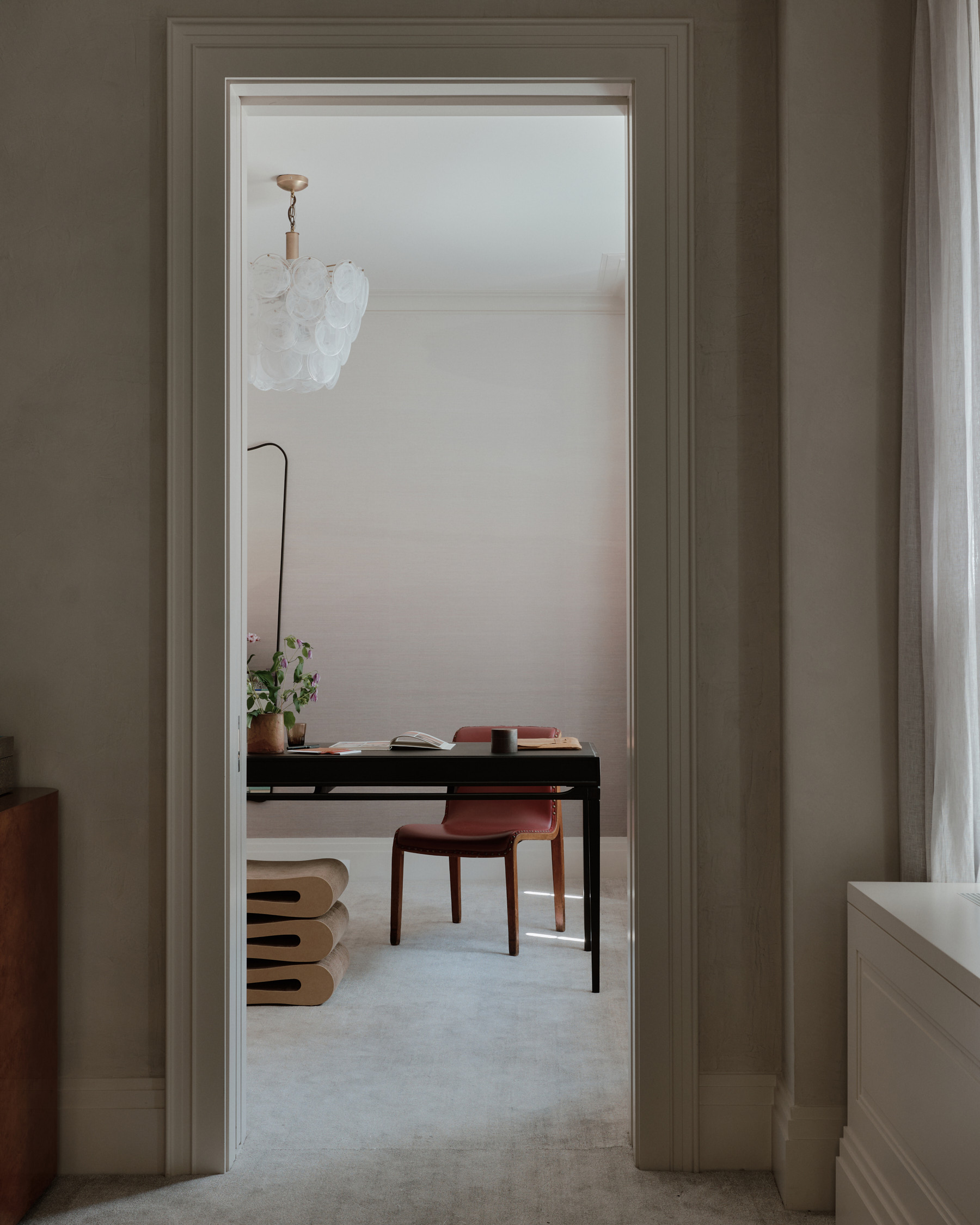
The maisonette was initially cloaked in dark finishes and divided into a series of enclosed rooms that restricted light and flow. Its upper level felt like a maze of small spaces winding around dual staircases, while the lower level suffered from the lack of natural light common to maisonettes. Yet beneath these conditions lay the bones of a Rosario Candela plan—gracious foyers, generously scaled formal rooms, and architectural proportions seldom found in contemporary developer units. Elmo Studios approached the renovation as both preservation and reinvention: on the first floor, walls were removed to create an open and flexible arrangement where kitchen, dining, and family living merge seamlessly into a communal hub, while upstairs, the grandeur of larger rooms was carefully maintained, with crown moldings and architectural details restored wherever possible.
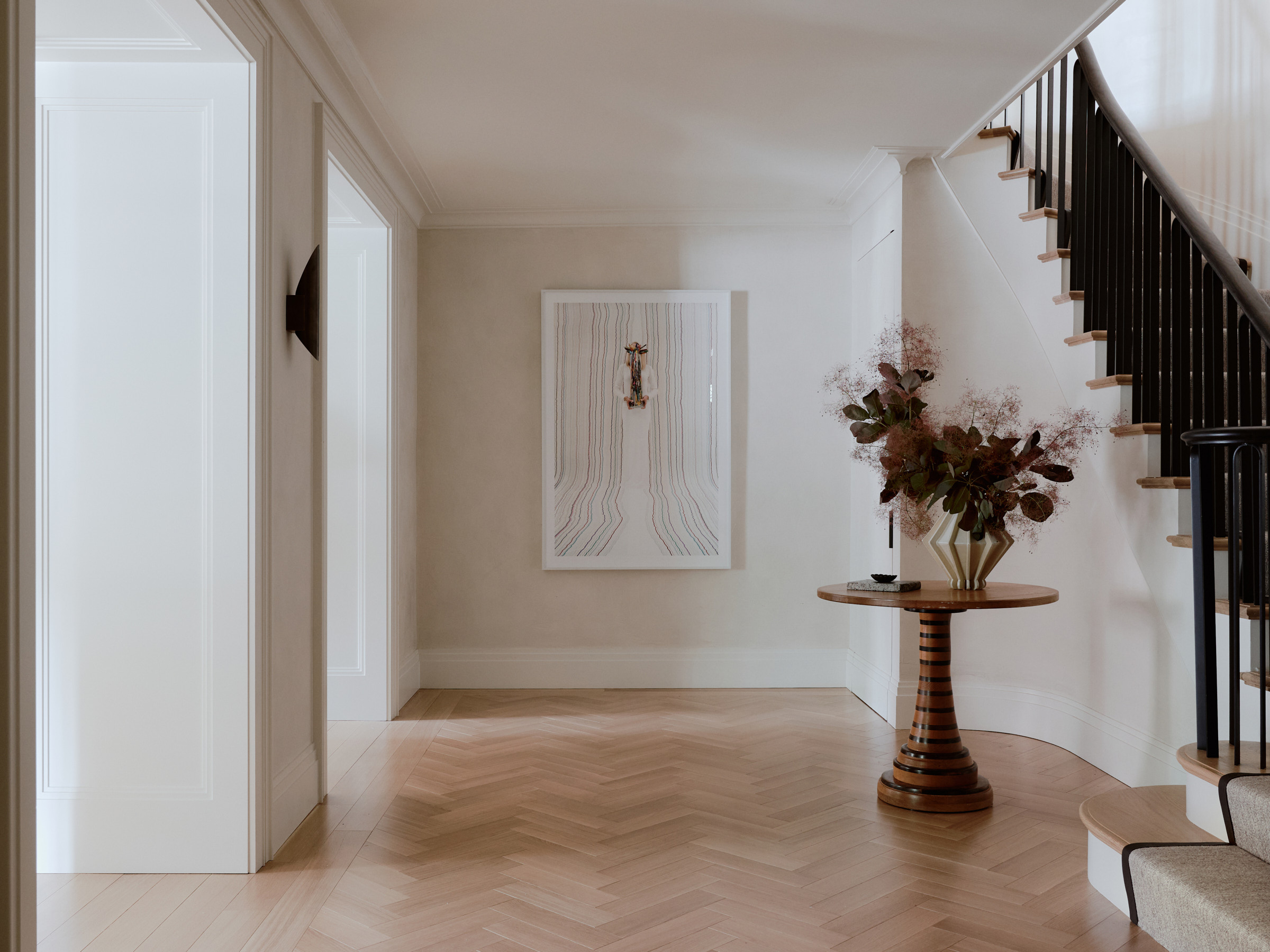
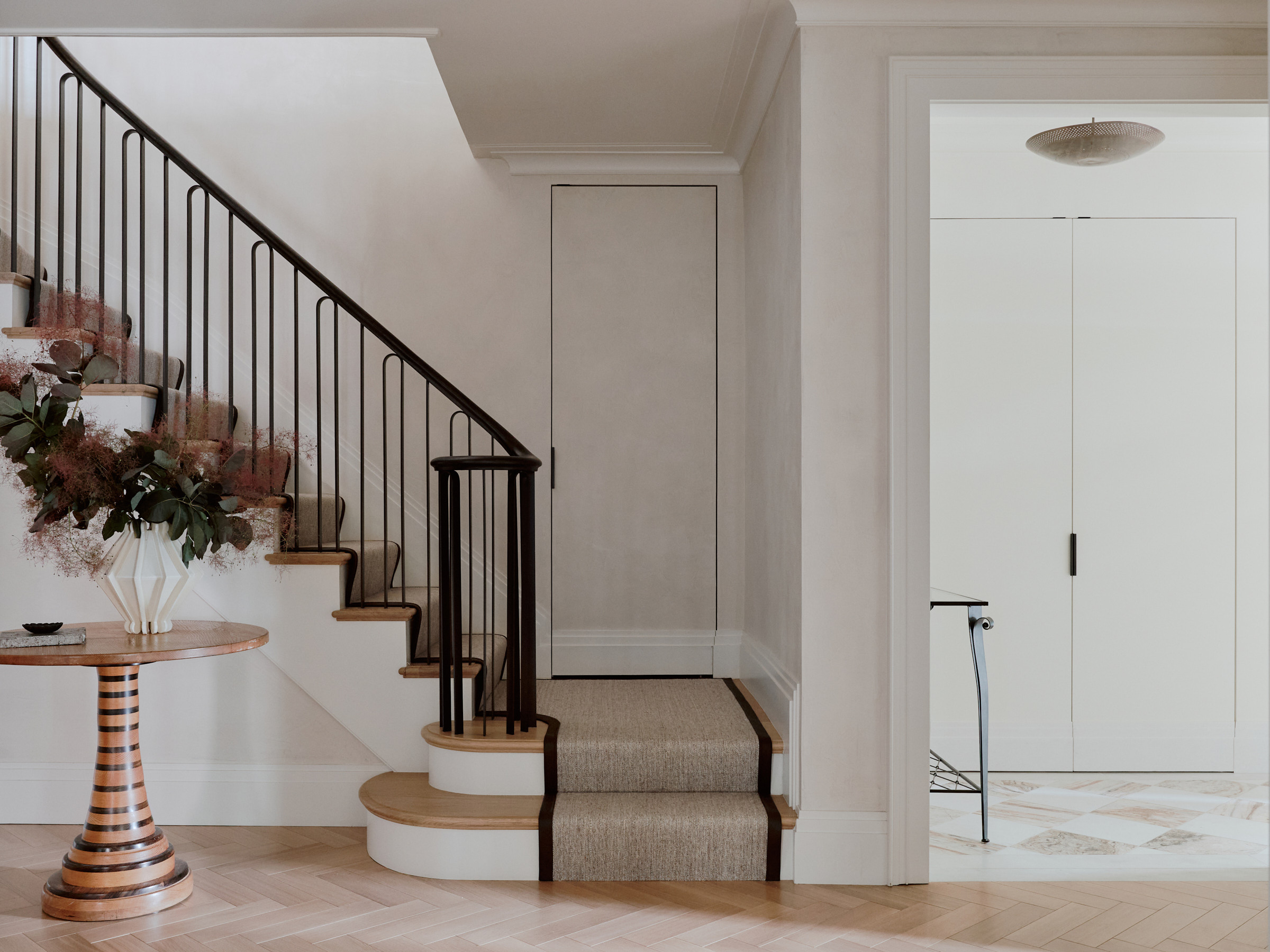
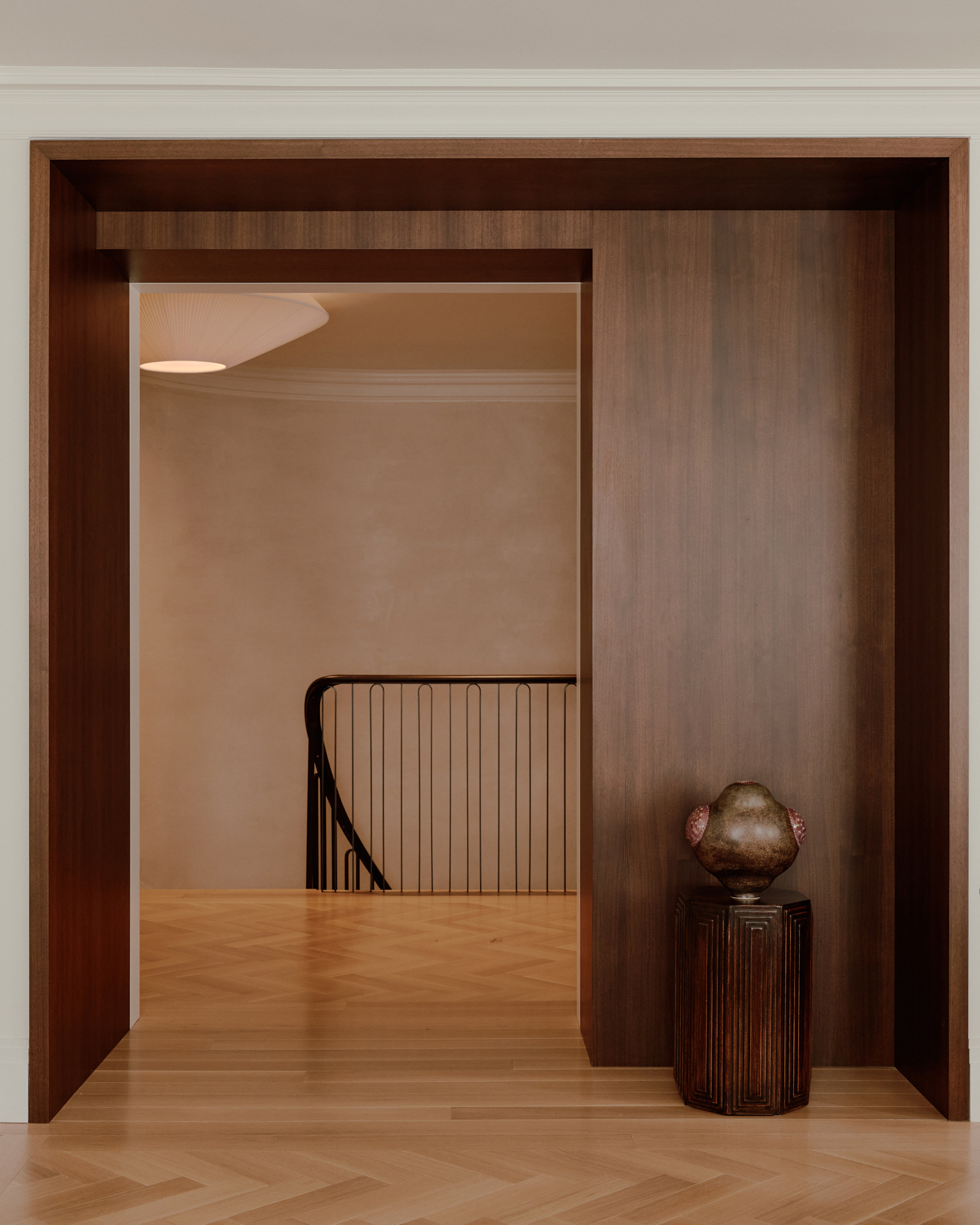
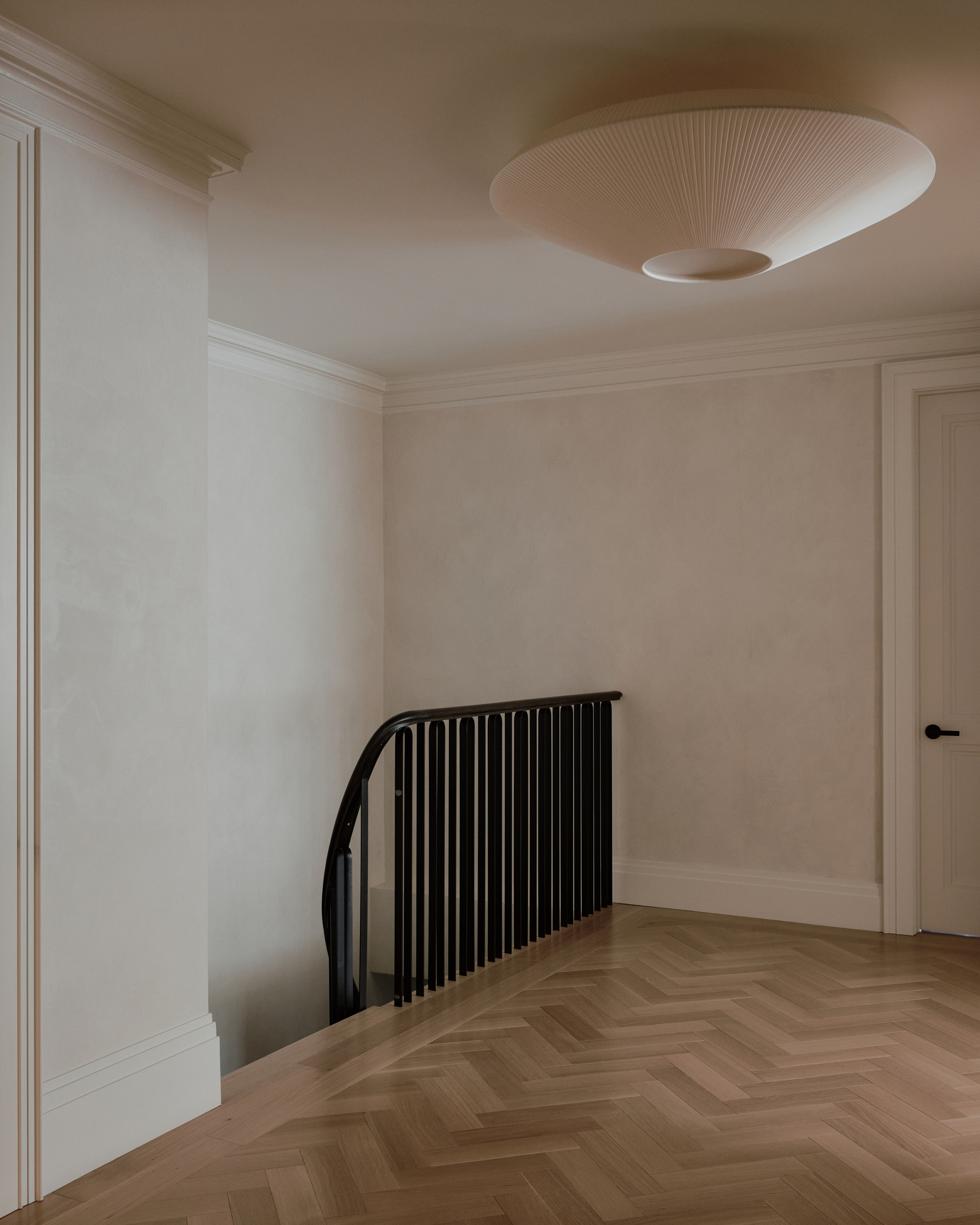
A defining element of the project is the central staircase that unites the two levels. Retaining its original curve, Elmo Studios amplified the stair’s sculptural presence by allowing its treads to spill into the lower foyer, and then wrapped the entire volume—foyers and stair alike—in a Roman clay finish, giving the house a soft, continuous core. A custom steel balustrade topped with a solid oak rail introduces a contemporary note that resonates with the historical framework. This move established the stair as both a circulation path and a visual anchor, the symbolic heart of the home.
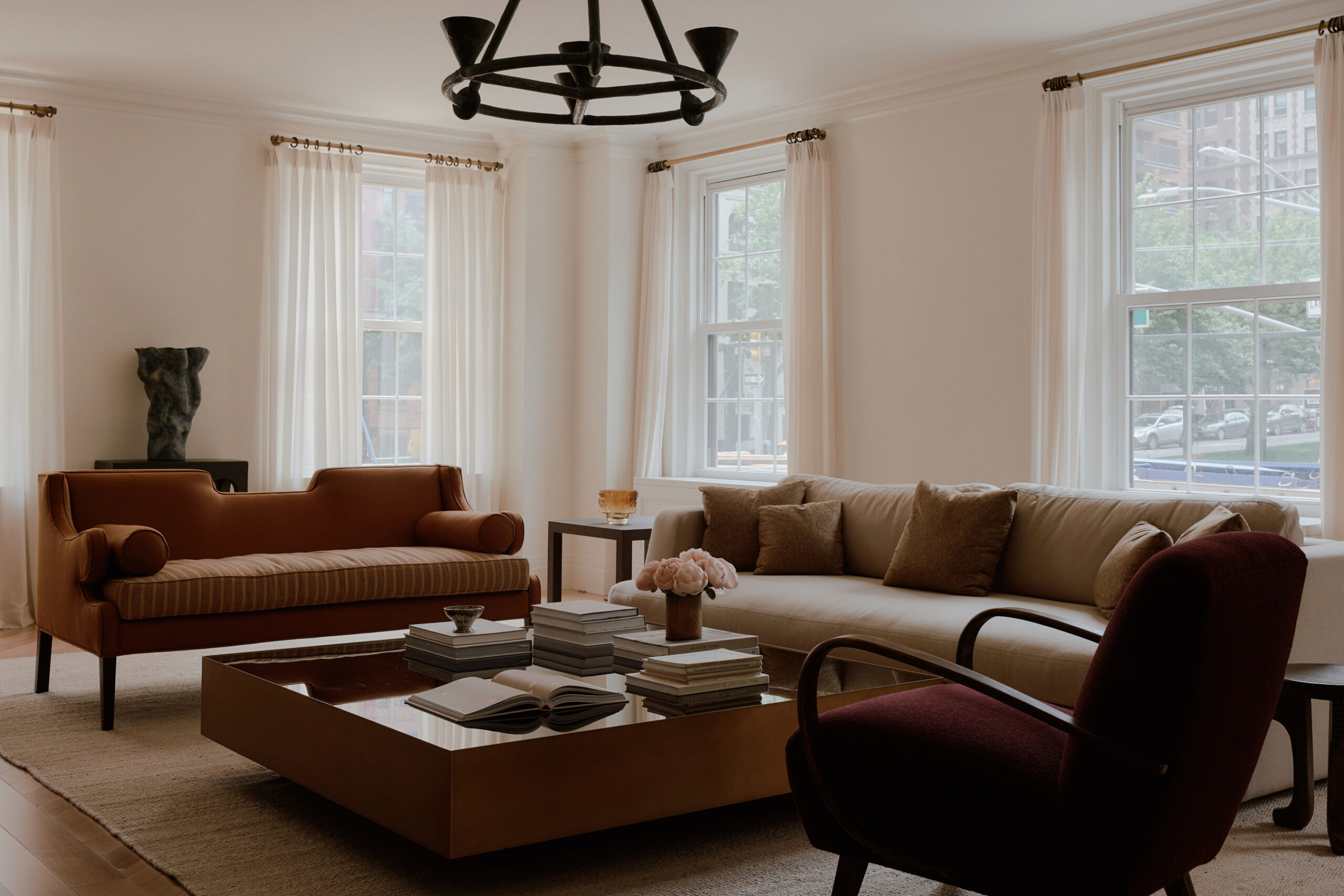
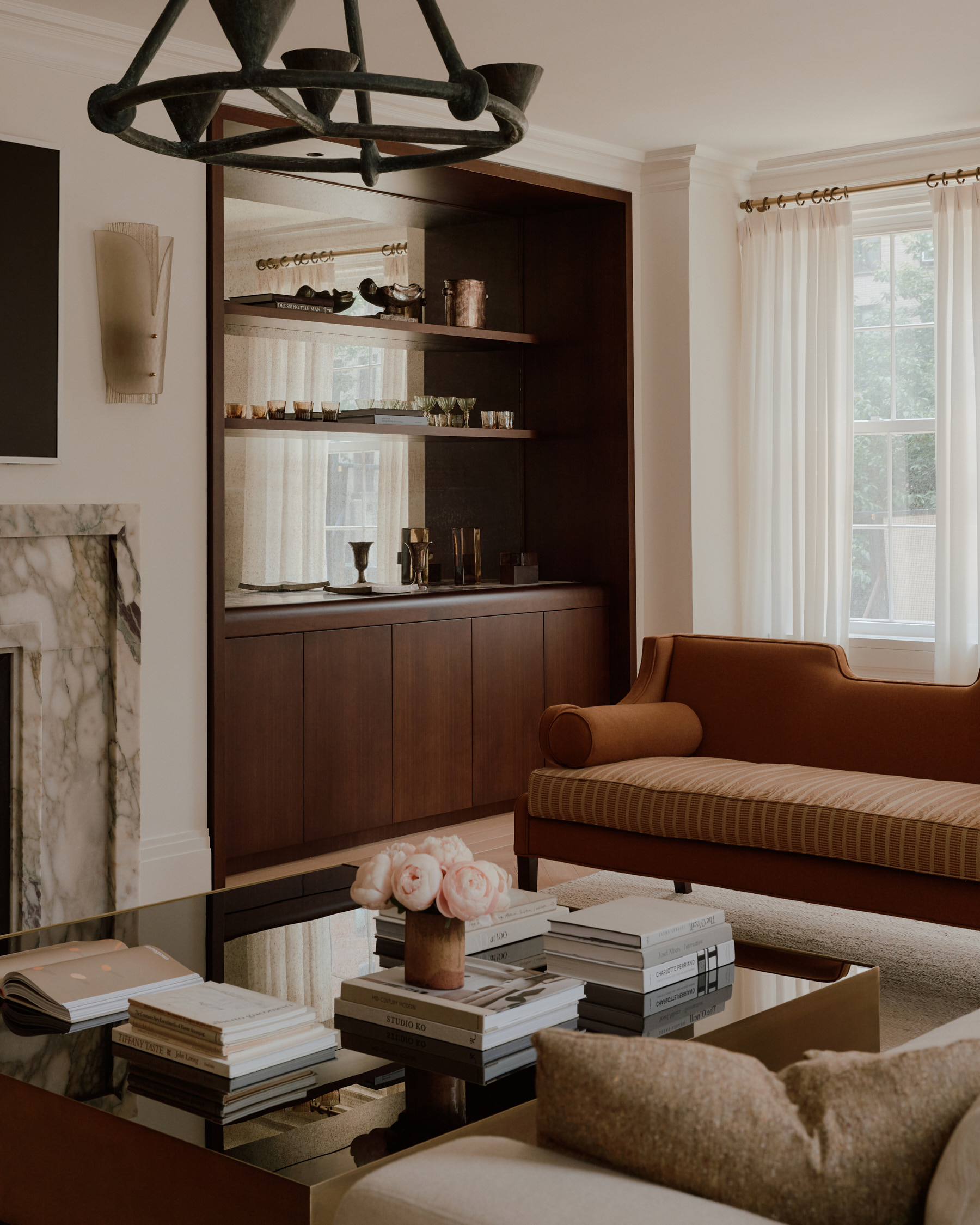
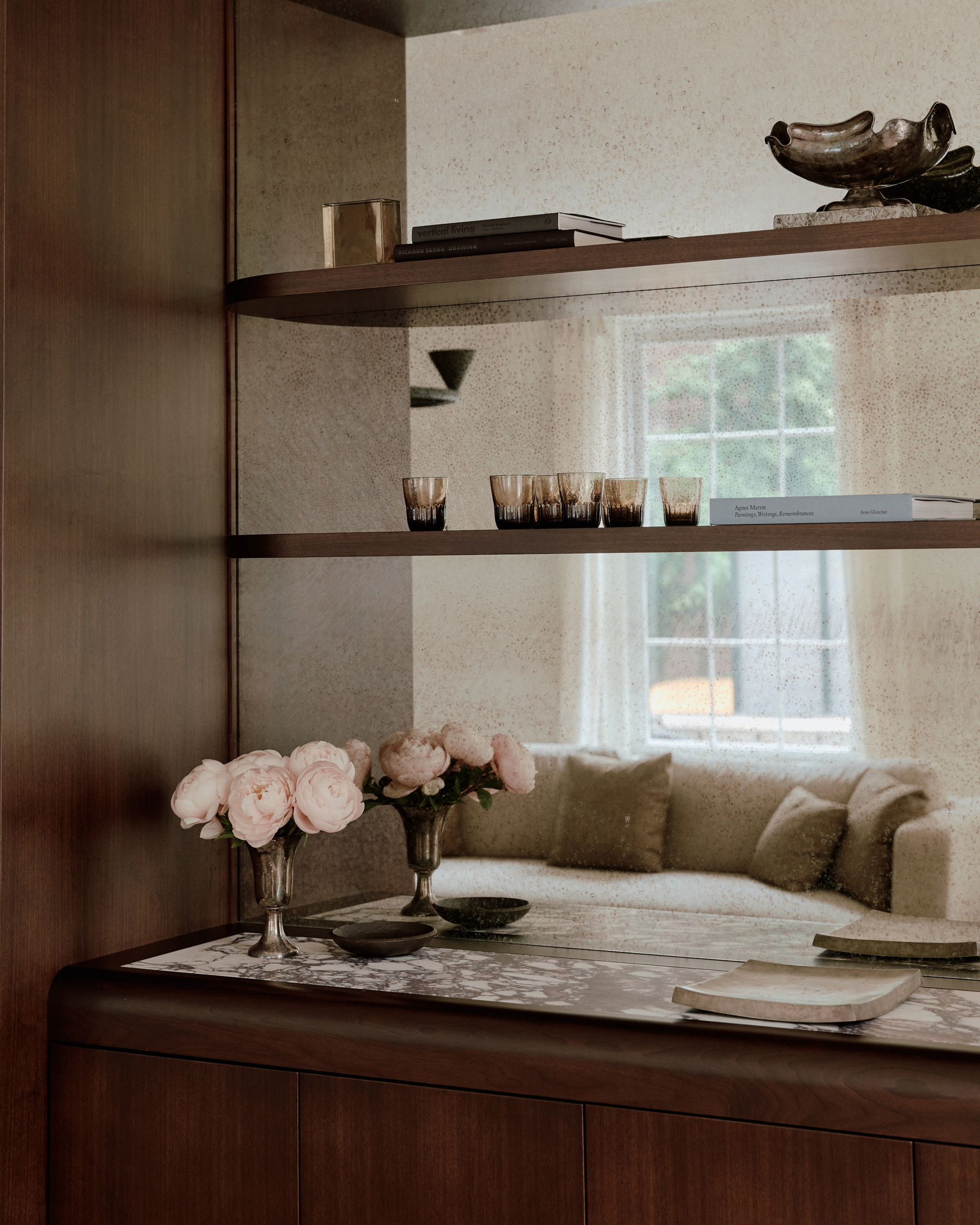
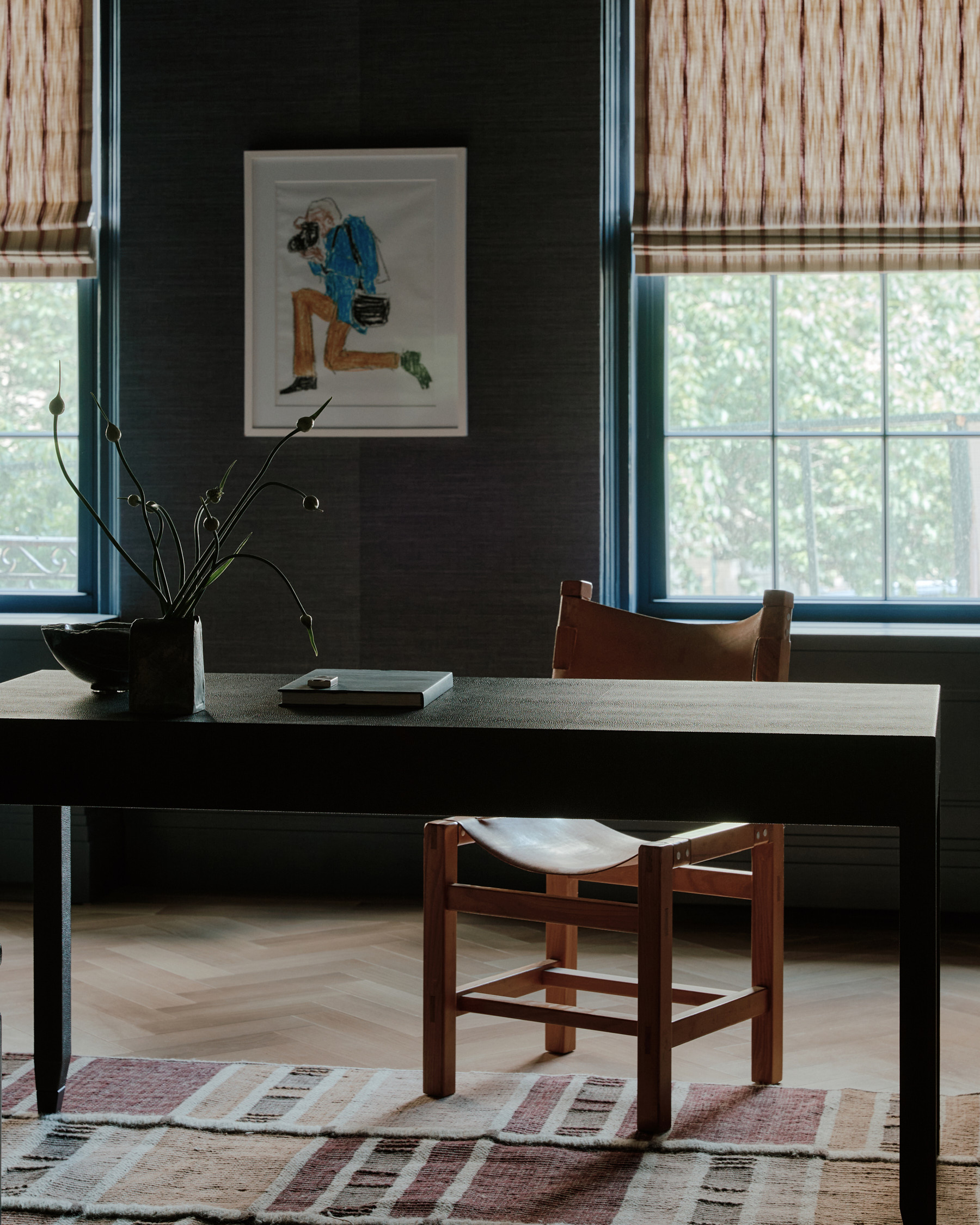
Materiality plays a central role throughout the project, providing richness in preserved rooms and calm restraint in newly conceived spaces. In the living room, the most light-filled corner of the home, custom walnut millwork frames a Calacatta Viola marble mantel and an antique mirrored bar, anchoring the space with warmth and grandeur. Elsewhere, Elmo Studios designed custom oak and walnut millwork, herringbone oak floors in a bleached rift-cut finish, and thresholds that reinterpret pre-war detailing in a modern language. These gestures ensured that even newly built elements feel like relatives of the home’s original fabric rather than interruptions.
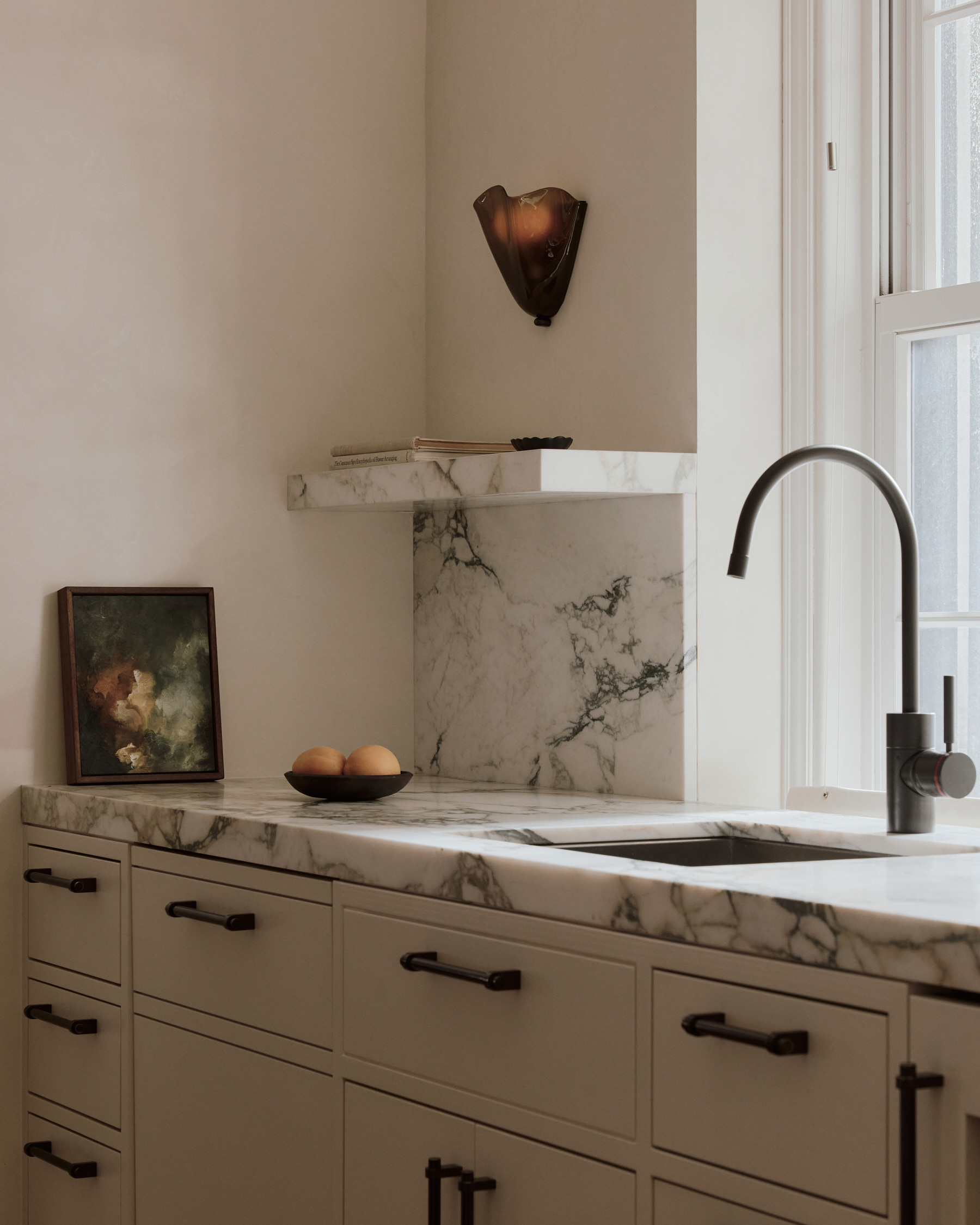
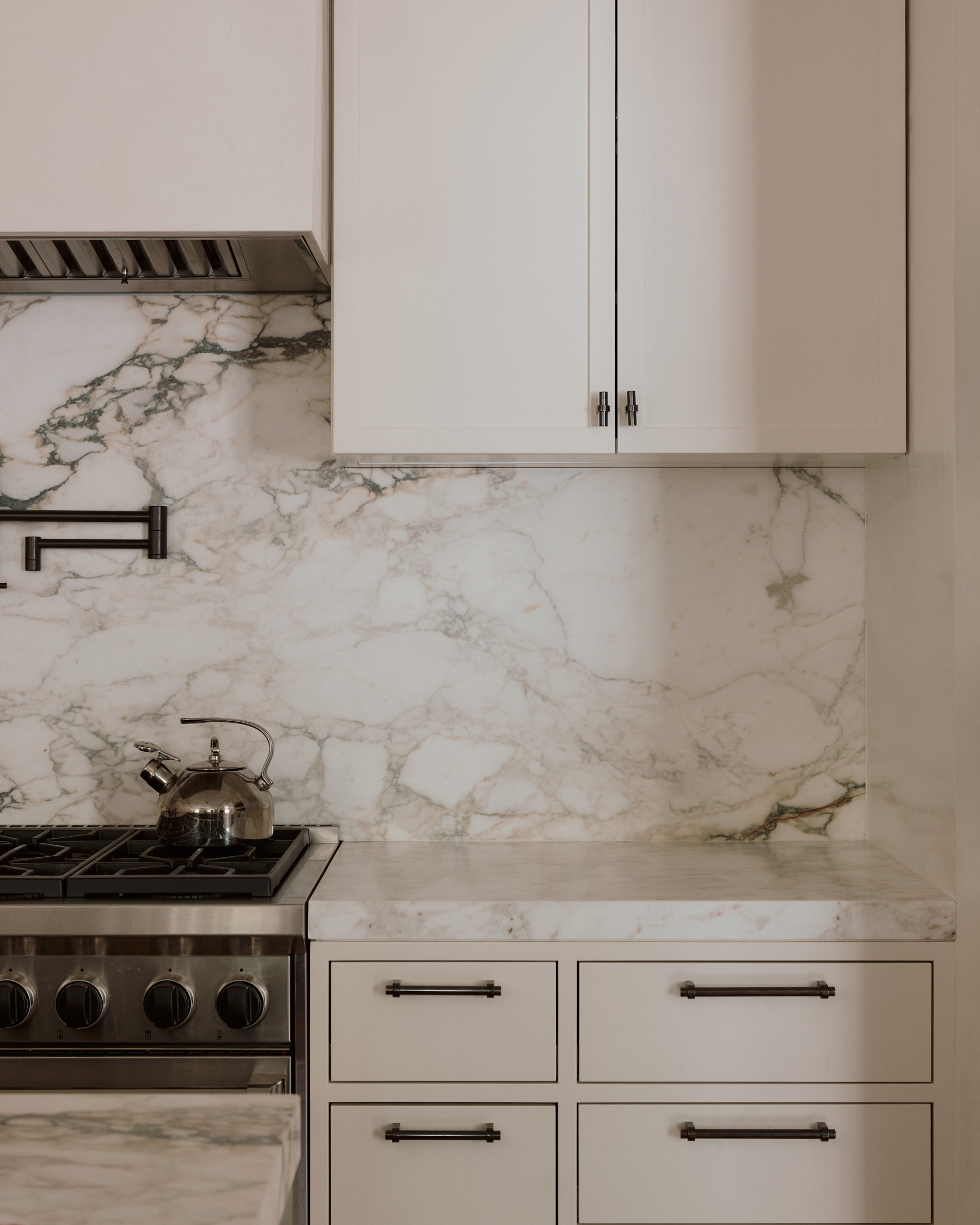
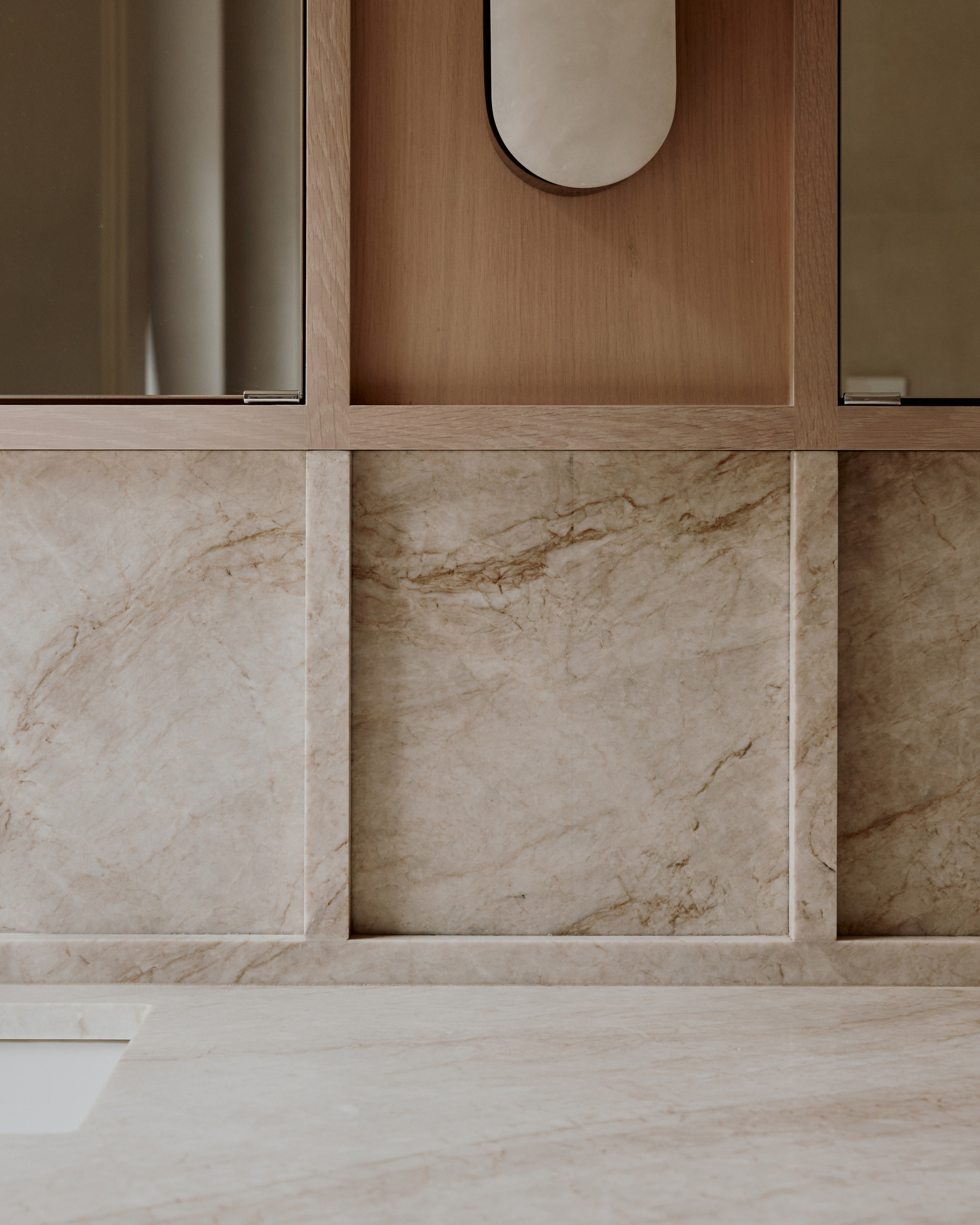
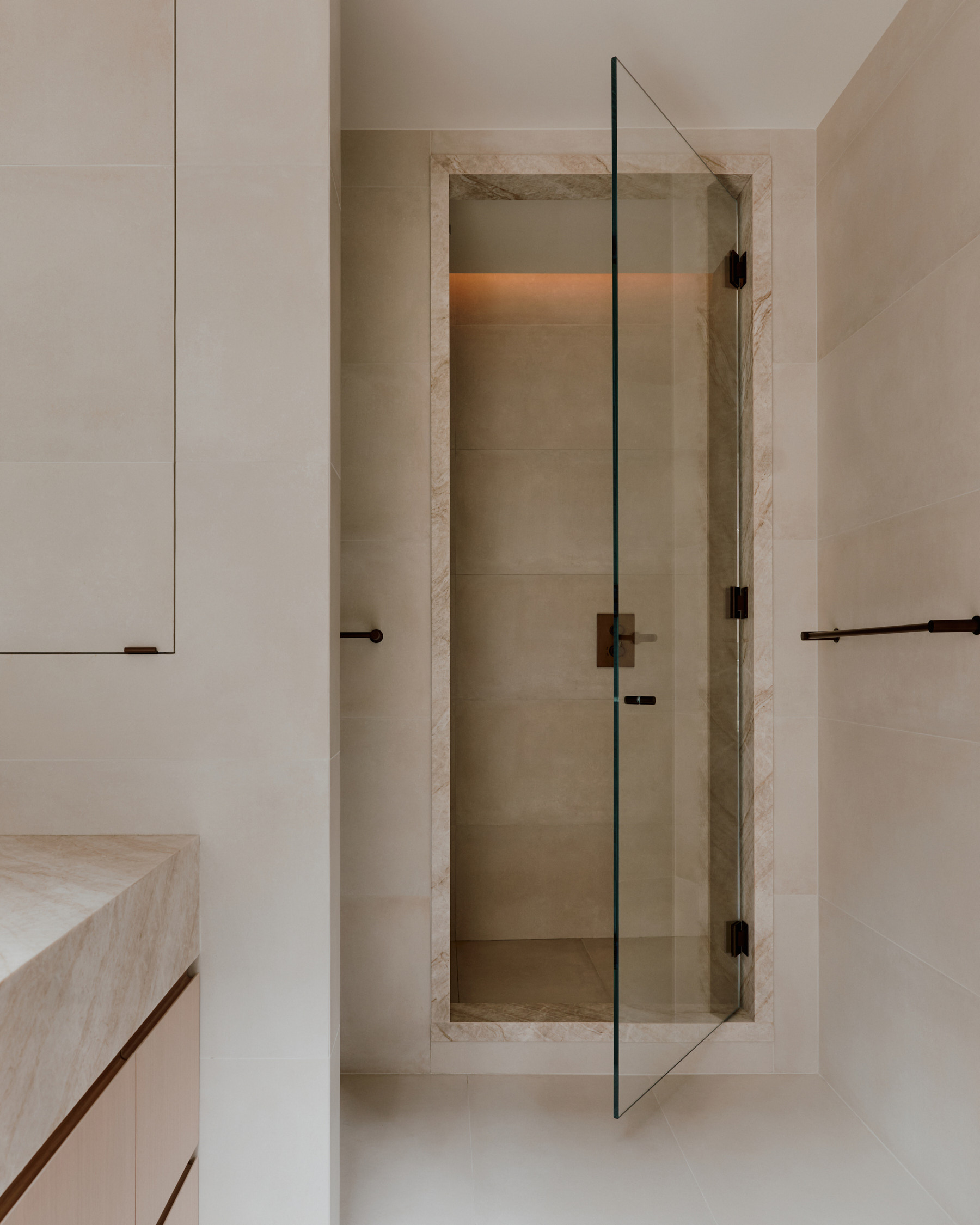
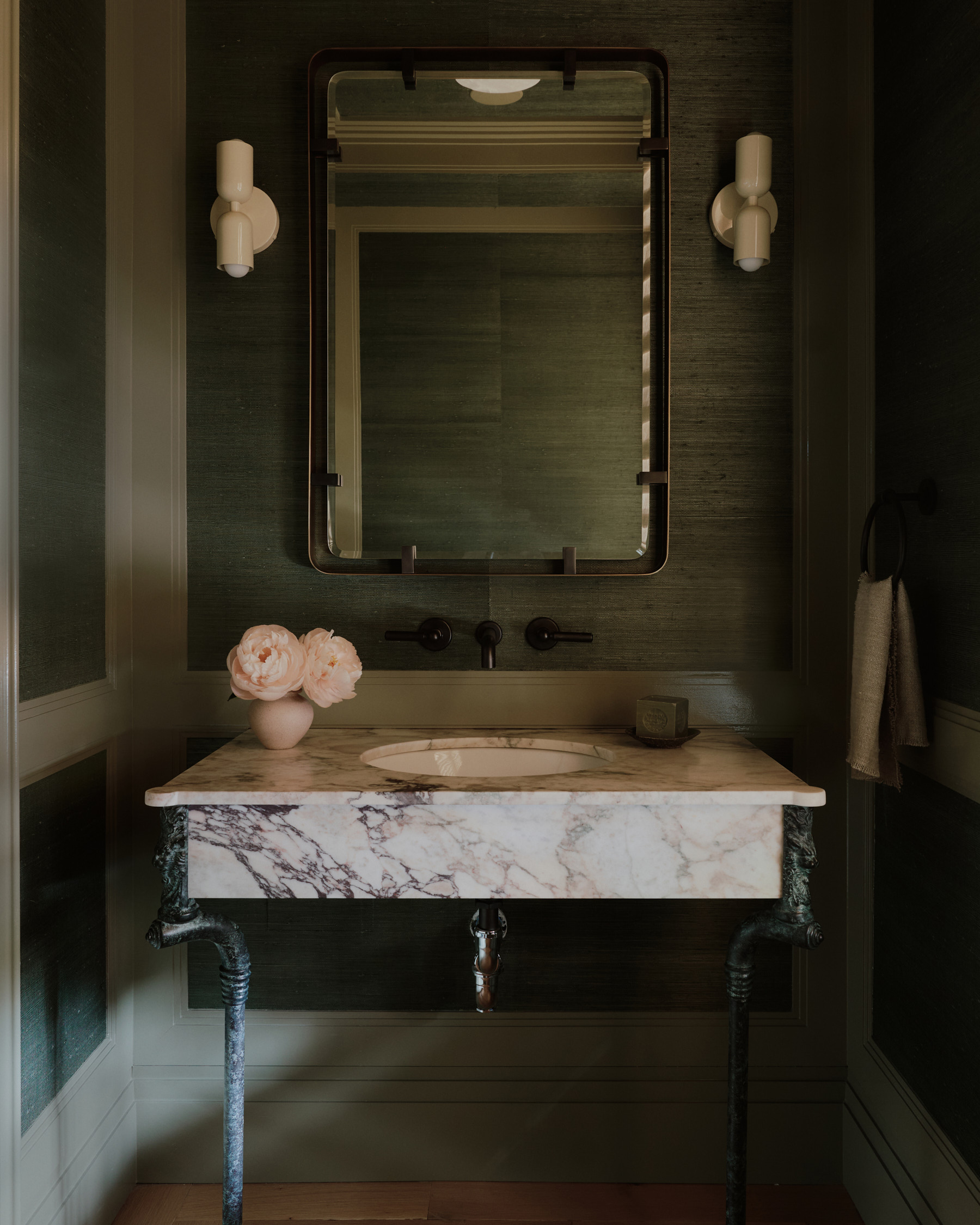
In contrast, the kitchen and bathrooms were treated as entirely new insertions and given a pared-back vocabulary. Creamy porcelain tile, Taj Mahal quartzite, and honed Calacatta Monet stone create serene, minimal spaces that act as intentional pauses within the more ornamented envelope. The palette is grounded in neutral tones and natural materials, layered with tactile finishes like Roman clay, lacquer, and leather, with moments of saturated color reserved for children’s rooms and the powder room.
The maisonette emerges as a study in contrasts—between old and new, grand and intimate, historic and contemporary. Elmo Studios’ intervention transforms the apartment into a luminous, flexible home tailored to the rituals of modern family life while remaining in dialogue with the enduring character of its pre-war architecture.
Photography by William Jess Laird
Styling by Mariana Marcki
Furniture and Decor by Beaudry Collier